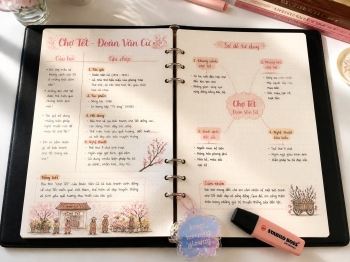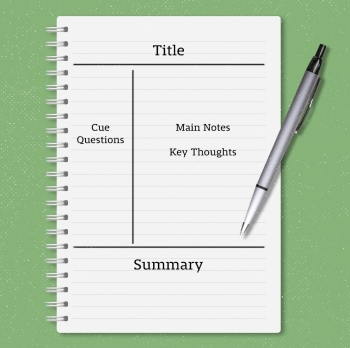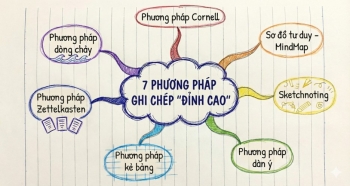

Do you find History class overwhelming with its endless dates, names, and wars? You are not alone. But what if there was a tool that could turn that "mess" into a masterpiece? Enter the Mind Map for History-the ultimate study hack for students.
WHY ARE MIND MAPS AND HISTORY THE "PERFECT COUPLE"?

1. Turn "Chaos" into Logical Systems
History textbooks can be dense. A mind map helps you reorganize entire dynasties, wars, and timelines into a structured, scientific order that makes sense to your brain.
2. See the "Big Picture"
Instead of rote learning isolated details, a mind map allows you to visualize the cause-and-effect relationships between events. You don't just see what happened; you see how it connects to the bigger story.
3. "Hack" Your Memory with Images
Our brains process images and colors much faster than text. Using keywords and doodles is the secret to remembering historical facts without the stress of cramming.
4. Deep Understanding (No More Rote Memorization)
When you draw a map, you are forced to think: "Why did this happen?" and "What was the consequence?".
This active learning process embeds the knowledge deep into your long-term memory.
Read more: What is a Mind Map? The Ultimate A-Z Guide for teens to Study smarter & Ace exams
4 TYPES OF HISTORY MIND MAPS YOU NEED TO KNOW
Different historical topics require different strategies. Here are the 4 distinct types of maps to help you conquer any chapter.
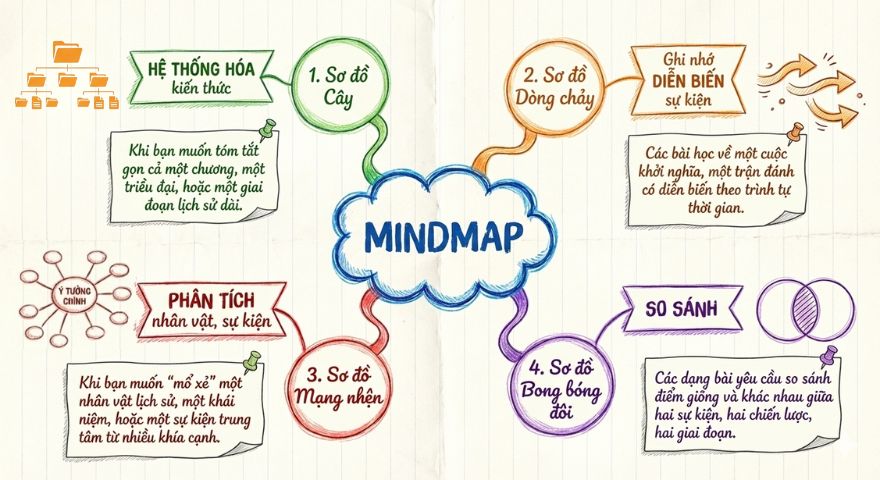
1. The Tree Map - The Master of Systematization
Best for: Summarizing an entire chapter, a long dynasty, or a complex era. It organizes information hierarchically (Root -> Trunk -> Branches).
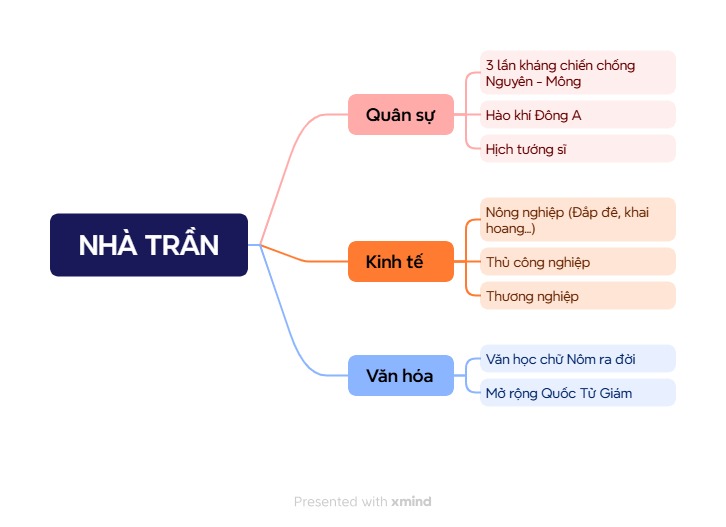
Example (7th Grade History): The Dai Viet under the Tran Dynasty.
- Root: The Tran Dynasty (1225 - 1400).
- Branch 1 (Military): 3 victories against the Mongol invasions; The "Dong A" spirit.
- Branch 2 (Economy): Agriculture (Dyke building, land reclamation); Handicrafts and trade development.
- Branch 3 (Culture & Education): Birth of Nom script literature; Expansion of the Temple of Literature (Quoc Tu Giam).
2. The Flow Map - The Master of Chronology
Best for: Tracking the sequence of events in a war, an uprising, or a revolution. This is the ultimate timeline tool.
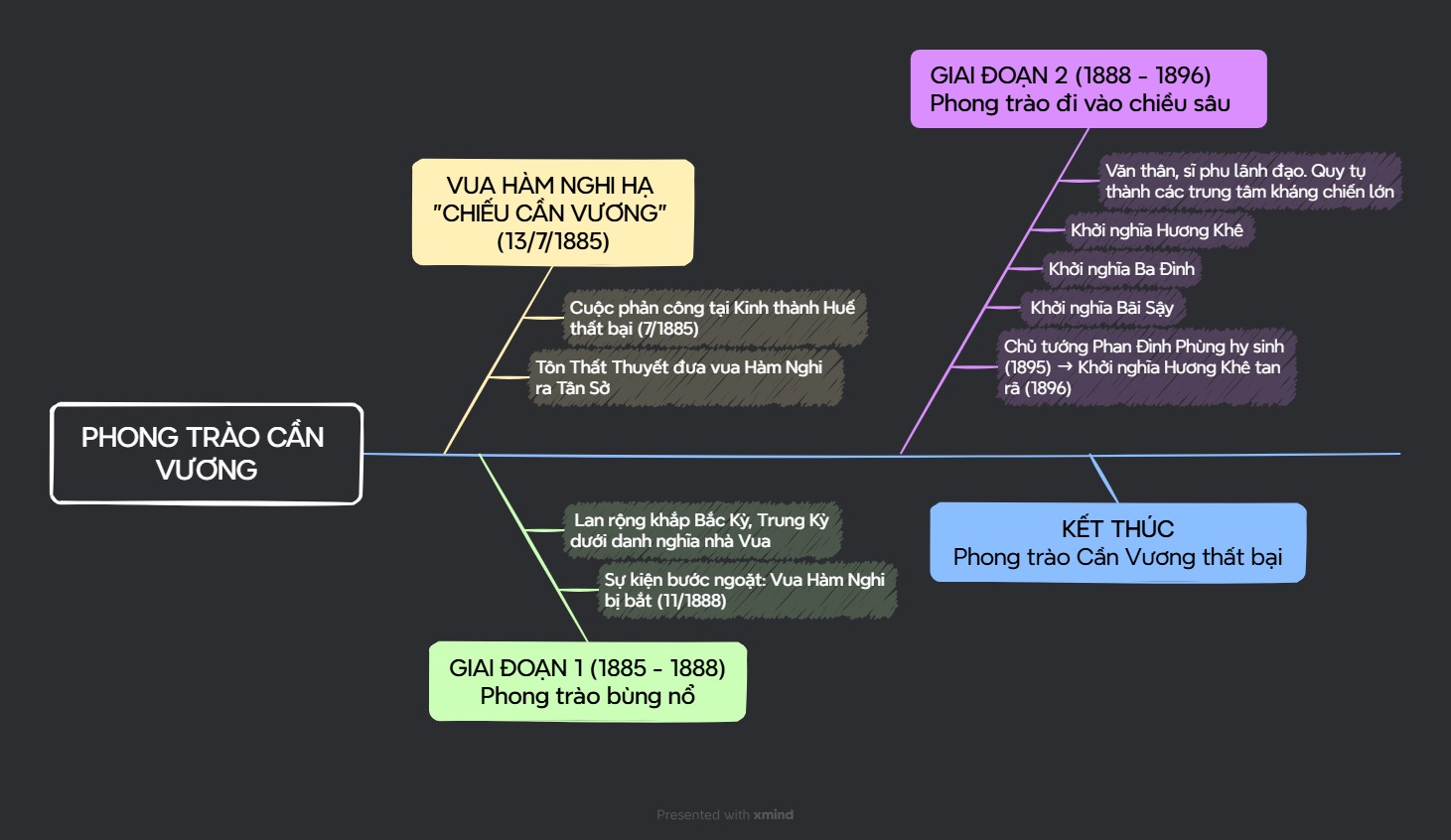
Example (8th Grade History): The Can Vuong Movement.
- King Ham Nghi issues the "Can Vuong Edict" ➡️
- Stage 1 (1885-1888): Movement explodes nationwide ➡️
- Stage 2 (1888-1896): Consolidated into large resistance centers ➡️
- Bai Say Uprising ➡️ Ba Dinh Uprising ➡️ Huong Khe Uprising (The peak) ➡️
- Result: The movement fails.
3. The Spider Map - The Master of Analysis
Best for: Analyzing a specific historical figure, a key concept, or a central event in detail.
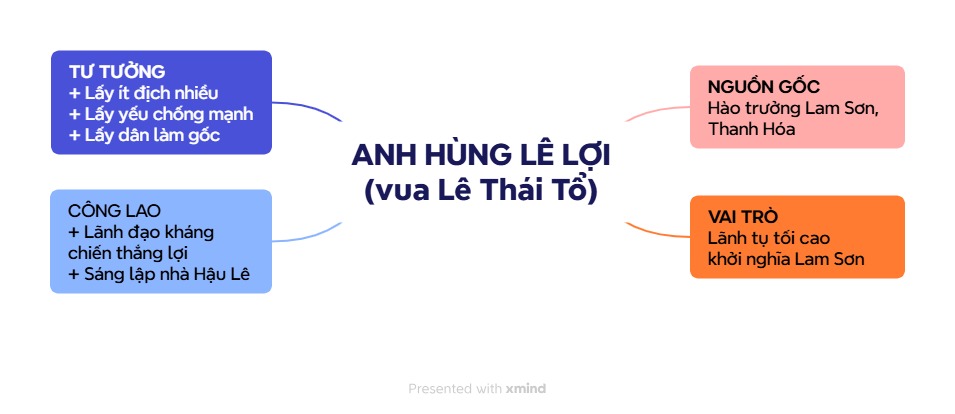
Example (7th Grade History): Analyzing Hero Le Loi.
Center: National Hero LE LOI.
- Leg 1 (Origin): Lam Son landowner, Thanh Hoa province.
- Leg 2 (Role): Supreme Commander of the Lam Son Uprising.
- Leg 3 (Ideology): "Use the few to defeat the many," "Use the weak to resist the strong," "People are the roots."
- Leg 4 (Achievement): Won the war of resistance, founded the Later Le Dynasty.
4. The Double Bubble Map - The Master of Comparison
Best for: Comparing and contrasting two events, strategies, or periods to find similarities and differences.
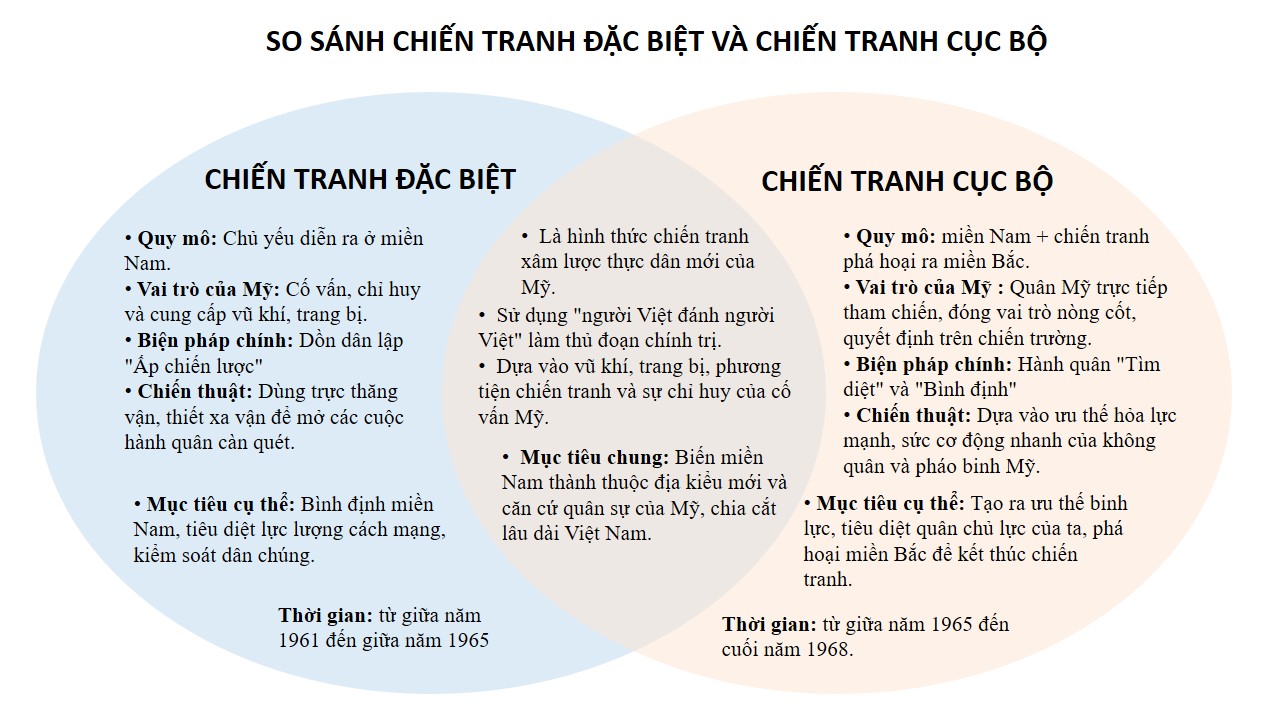
Example (9th Grade History): "Special War" vs. "Local War" (Vietnam War).
- Left Bubble (Difference - Special War): Main force was the Saigon puppet army.
- Center (Intersection/Similarities): Both were US neo-colonial forms of aggression; used "Vietnamese to fight Vietnamese"; relied on US weapons and advisors.
- Right Bubble (Difference - Local War): Main force was the US Expeditionary Corps and allied troops.
HOW TO DRAW A HISTORY MIND MAP IN 4 SIMPLE STEPS
Step 1: The Central Topic
Take a blank sheet of paper. Write the name of the lesson in the center and draw a small illustration to make it lively.
Ex: For "Quang Trung Defeats the Qing Army," draw King Quang Trung's iconic hat.
Step 2: Main Branches
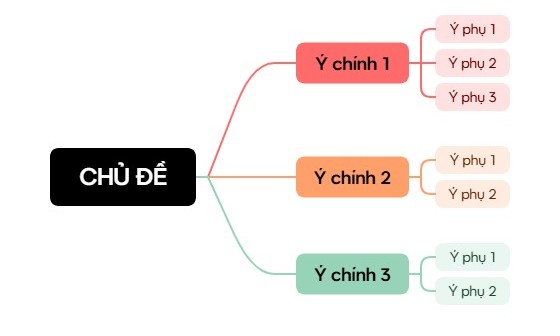
From the center, draw large branches radiating outward. Each branch represents a main idea (Causes, Developments, Results, Significance).
Tip: Use curved, organic lines instead of straight ruler lines-it’s better for your brain!
Step 3: Sub-branches & Keywords
Extend smaller branches from the main ones to add details.
Crucial Rule: Use KEYWORDS ONLY. Do not write full sentences. Keep it short and punchy.
Step 4: Decorate & Creative
This is the fun part! Use different colors for different branches (Color Coding). Add symbols like flags, swords, or arrows to make the map eye-catching and memorable.
Note: Don't worry about drawing "ugly"! As long as it helps you understand, it is a success.
CONCLUSION
A Mind Map for History isn't magic, but it is a powerful tool to decode the past. With this method, History will no longer be a boring list of dates but an exciting journey of discovery.
Start tonight by sketching a simple Tree Map for your latest chapter. Share this article with your classmates so you can conquer History class together!
Read more: 5 mistakes 90% of students make when drawing Mind Maps - How to draw correctly