
Are you tired of filling up entire notebooks but still failing to remember anything? Discover the Cornell note-taking method—a smart, one-page system that helps you summarize knowledge, review quickly, and dramatically improve your grades.
ARE YOU EXHAUSTED EVERY TIME YOU OPEN YOUR NOTEBOOK?
Chances are, you've been in this situation: you write until your hands cramp, but when you review your notes at home, nothing makes sense. Your notebook is a chaotic wall of text, making it impossible to separate main ideas from random examples.
When exam season hits, it feels like you have to relearn everything from scratch because you don't know where to start. If this sounds familiar, the Cornell method is exactly what you need. It’s a simple note-taking hack that neatly organizes your knowledge onto a single page.
WHAT IS THE CORNELL METHOD?
This is a note-taking system invented by Professor Walter Pauk at Cornell University.
Its primary goal is to help you record, process, and summarize information simultaneously. Instead of writing mindlessly across the whole page, you will divide your paper into 3 distinct sections.
This approach is proven to help you learn faster and retain information much longer than traditional note-taking methods.
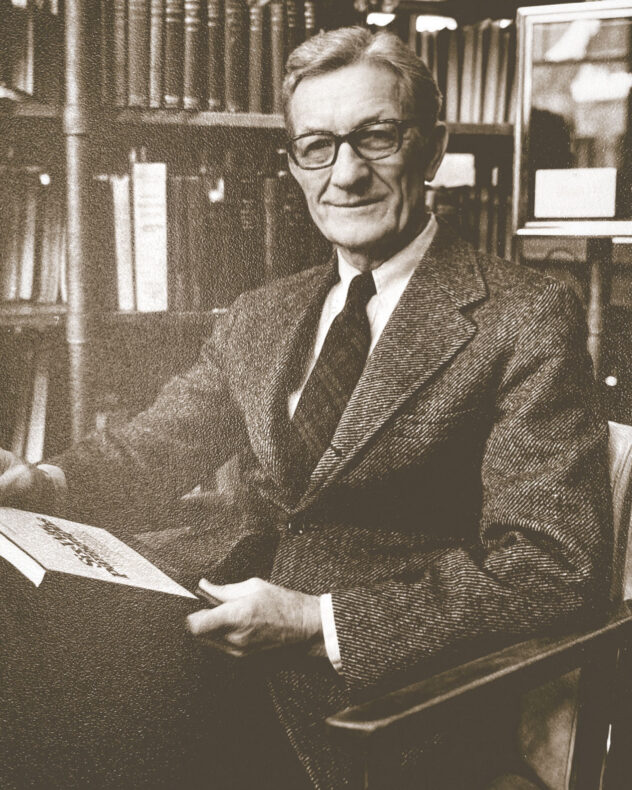
(Image source: Cornell University)
MASTER CORNELL NOTES IN 3 SIMPLE STEPS
To upgrade your note-taking skills, all you need is a pen and a piece of paper.
Step 1: Set Up your page
First, prepare your layout. Draw a horizontal line about 5-6 lines from the bottom of the page. This is your Summary Area.
Next, draw a vertical line to divide the top section into two columns. The right column should be wider (about 2/3 of the page)—this is your Notes Column. The narrower left column is your Cue Column.
Step 2: Take Notes during class
During the lecture, focus your writing on the Right Column (Notes Column). Your task is to jot down main ideas, formulas, definitions, and important examples.
- Pro Tip: Don't try to transcribe every single word the teacher says. Use bullet points, symbols, abbreviations, and draw quick diagrams if necessary.
- The Goal: Capture the core structure of the lesson as concisely as possible.
Step 3: Complete your notes after class
This is the most crucial step that transforms you into an active learner. Spend about 5-10 minutes right after class to fill in the remaining two areas.
- A. The Left Column (Cue Column):
Review your notes on the right. For every main idea, formulate a question or extract a keyword, and write it in the left column.
o Example: If you wrote down Newton's Third Law on the right, write "What is Newton's Third Law?" on the left.
- B. The Bottom Area (Summary):
Try to cover the right column with your hand. Look only at the cues/questions on the left and try to answer them out loud. Finally, write a 1-3 sentence summary of the entire page in the bottom section. This is the ultimate way to consolidate your lesson.
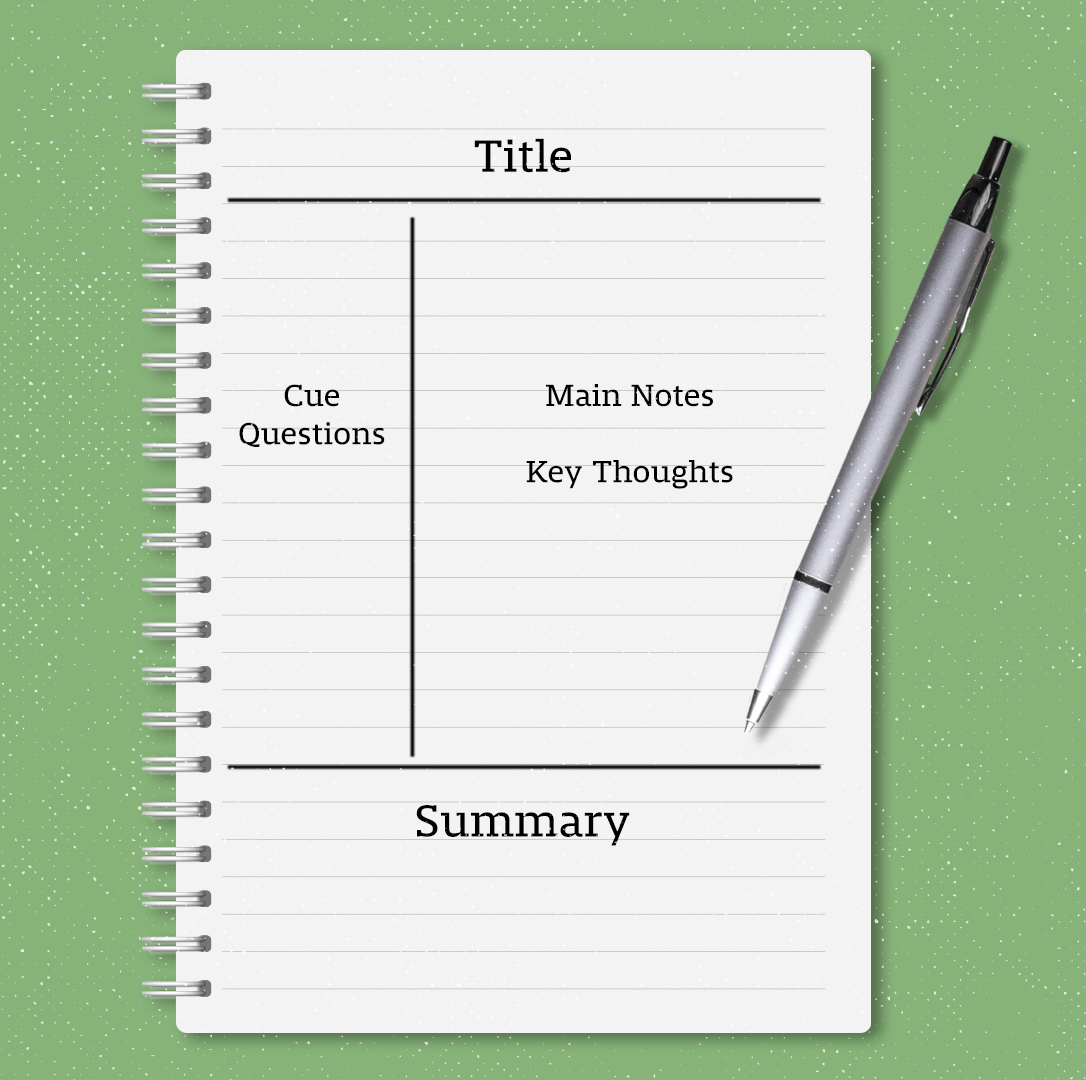
(Image illustrating the Cornell method - Source: Cornell University)
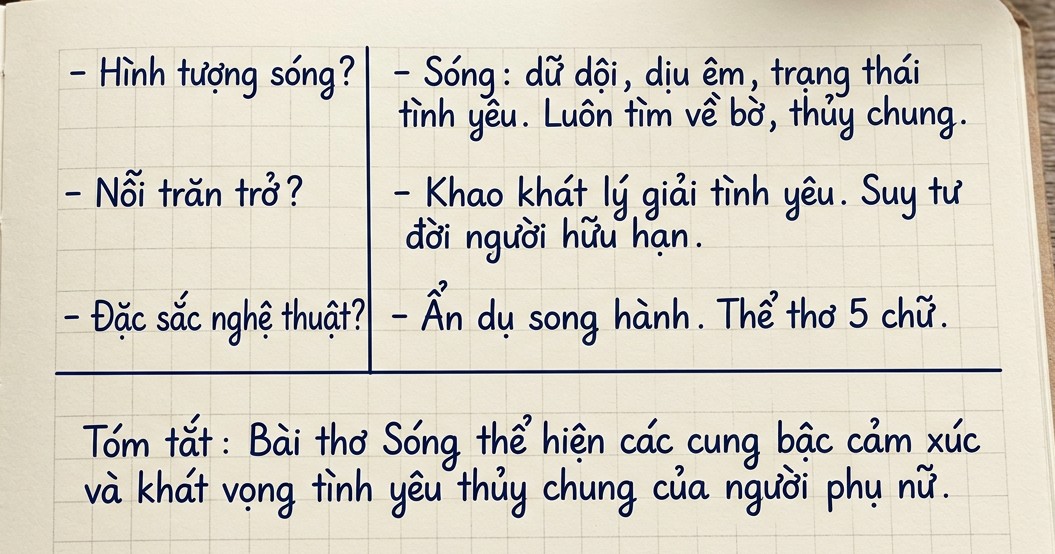
Example: Using Cornell notes for literature
Let’s see how to apply this method to analyze the Vietnamese poem "Sóng" (Wave) by Xuân Quỳnh.
WHY IS THE CORNELL METHOD SO EFFECTIVE?
It promotes active learning:
Formulating questions and writing summaries forces your brain to critically process the information.
It provides logical organization:
You can instantly differentiate between core concepts and supporting details.
It is the ultimate exam prep tool:
When reviewing, simply cover the right column and use the left column to quiz yourself. This technique (Active Recall) is scientifically proven to enhance long-term memory.
It saves you time:
Better notes mean faster, more efficient revision sessions.
TRANSFORM YOUR NOTEBOOK TODAY

The Cornell method isn't magic; it's a strategic note-taking skill. It empowers you to master your knowledge and makes studying significantly easier.
Becoming an "academic weapon" is completely within your reach if you equip yourself with the right tools. Try applying the Cornell method in your very next class-you'll notice an immediate upgrade in your learning efficiency. Good luck!
See more: Exam survival guide: 5 Study Tips to focus like a "Pro Gamer" & ace your finals